
How to Get Rid of Bagworms
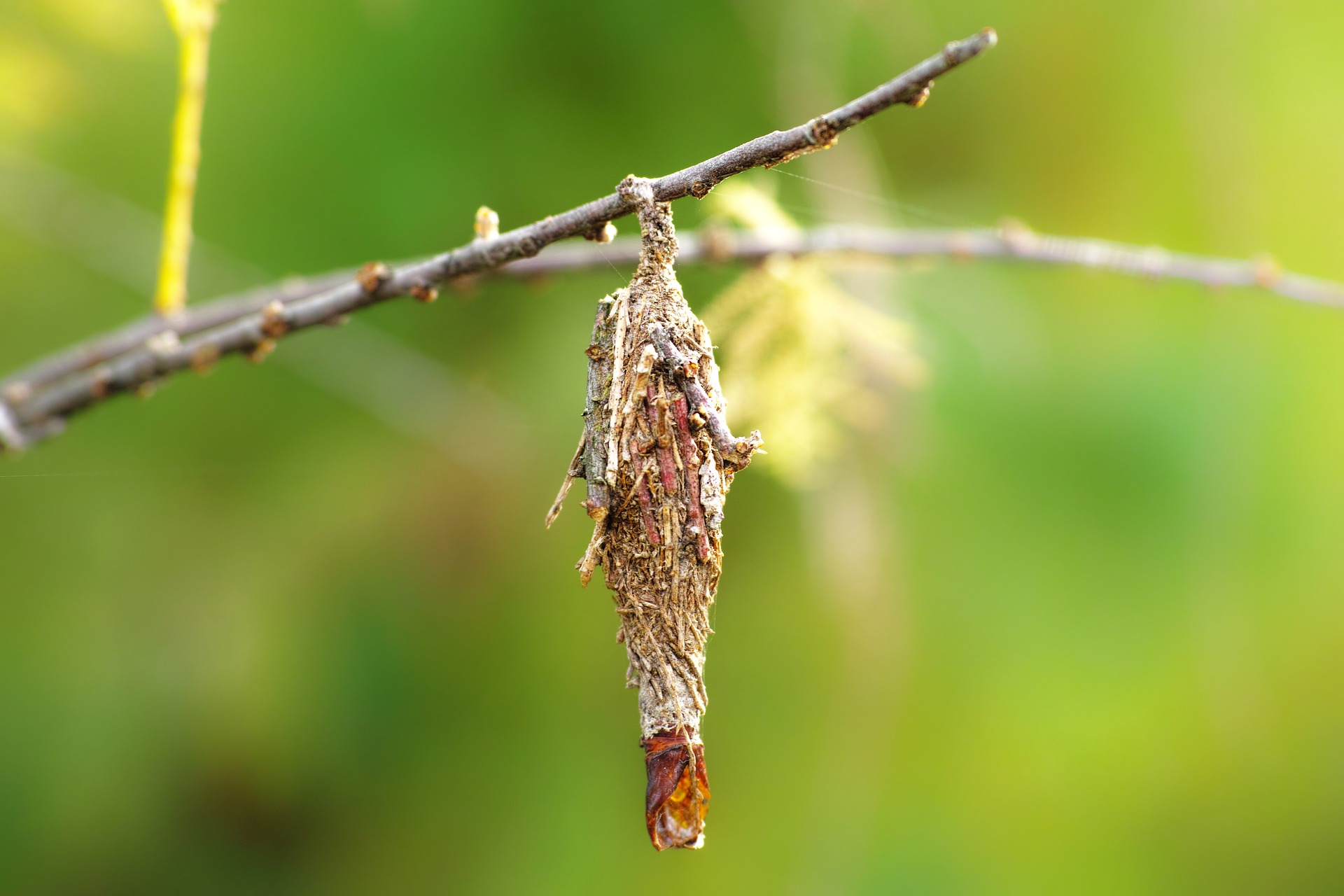
Bagworms are easy to miss until they've already done serious damage. Their bags blend in with plant foliage and get mistaken for pinecones or dead growth. By the time most homeowners notice them, the feeding season is nearly over and treatment options are limited. Knowing what to look for and when to act makes the difference between a manageable problem and a dead arborvitae.
Bagworms build spindle-shaped cases from silk, twigs, and bits of foliage from the plant they're feeding on. The bags start small, around 1/8 inch, and grow to about 1.5 to 2 inches as the caterpillar matures. They hang from branches and blend in well enough that they're regularly confused with pinecones or dead plant matter.
To confirm bagworms, look for bags that are uniform in shape, hanging from twigs or branches rather than growing from the plant. Gently disturb one in late spring or early summer and a small caterpillar head may poke out from the top. Later in the season the caterpillar will have sealed itself inside to pupate.
Bagworms feed on over 120 species of trees and shrubs, but evergreens take the worst damage. Unlike deciduous trees, evergreens can't regrow lost needles. A heavy infestation on an arborvitae or juniper can kill branches outright or take out the entire plant over a couple of seasons.
The most commonly affected species include:
If you have arborvitae or juniper in your landscaping, those are the first plants to check.
Getting rid of bagworms comes down to acting at the right point in their life cycle. Miss the window and your options shrink fast.
Eggs overwinter inside bags on the plant. Hand removal during this window eliminates the following year's population before it starts.
Eggs hatch and larvae begin feeding. Bags are tiny, caterpillars are small, and bio-based treatments like Bt and Spinosad work well.
Larvae continue feeding and bags grow larger. Treatment still works but requires stronger pyrethroid-based products.
Caterpillars seal their bags to pupate. Insecticides stop working entirely. Most homeowners notice the damage at this point.
Most homeowners notice bagworms in late summer when the damage becomes obvious, which is exactly when treatment stops working. The goal is to catch them in May or June before they've had time to do much damage.
For smaller infestations or as a late-season option, hand removal is worth doing. Cut or pull the bags from the plant and drop them into a bucket of soapy water to kill the insects inside. Don't toss them on the ground nearby; they'll climb back up and resume feeding.
Hand removal is practical for accessible, smaller trees and shrubs. For larger trees or heavy infestations, it's not realistic on its own.
If you catch the infestation during the active feeding window, insecticide treatment is effective. The right product depends on when you're treating.
Works well on small caterpillars and has a lower impact on surrounding plants and beneficial insects. This is the preferred window for treatment.
More effective against larger larvae, though results are less consistent. Two applications spaced two weeks apart may be needed for heavy infestations.
Once caterpillars have sealed their bags, spraying won't work. Hand removal is the only option until the following spring.
If bagworms have been a problem before, they'll likely come back. Bagworm eggs overwinter on the plant and hatch the following spring. Larvae can also balloon on silk strands and drift in from neighboring trees and properties, so a well-maintained yard isn't fully protected from new infestations.
The treatment window for bagworms is narrow and easy to miss. Most homeowners notice the bags in late summer when the damage is already done, and effective treatment is no longer an option. A professional tree and shrub program handles inspection and treatment timing so you're not reacting after the fact.